Reading the Breath, Part Two:The Patterns a Trained Rescuer Sees
Article one taught one binary: unresponsive and not breathing normally means compressions. This is the next rung. Noisy breathing that means open the airway. Abnormal spontaneous patterns that mean serious brain injury. The post-submersion watch window, and what the evidence actually says about delayed deterioration.
Article one in this series stopped at a single decision, on purpose. It was a binary, a yes-or-no with only two outcomes: an unresponsive patient who is not breathing normally is in cardiac arrest, and the response is compressions; anyone else is watched and supported. Agonal gasping does not count as breathing. That binary is the whole of what an untrained rescuer needs, and nothing in this article changes it.
This article is the next rung. It is written for the trained rescuer, the one who has put in the hours, and it does one thing the lay binary cannot. It separates the patient who is in arrest from two other patients who are not. The first is breathing, but the airway is partly blocked. The second is breathing spontaneously, but the pattern is abnormal because the brain driving it is injured. Both look, at a glance, like the gasping patient from article one. None of the three is managed the same way.
For an untrained rescuer, the discriminations below are noise. The lay binary is faster, harder to get wrong, and correct often enough that adding nuance to it costs lives. This article does not override that binary. It adds the reads that a trained rescuer can act on without slowing down the one decision that matters most.
When the Breathing Is Noisy
A patient who is making a sound when they breathe is, by definition, moving air. Sound requires airflow. The sounds below come from air forced past a partial obstruction, and the obstruction is the problem to solve.
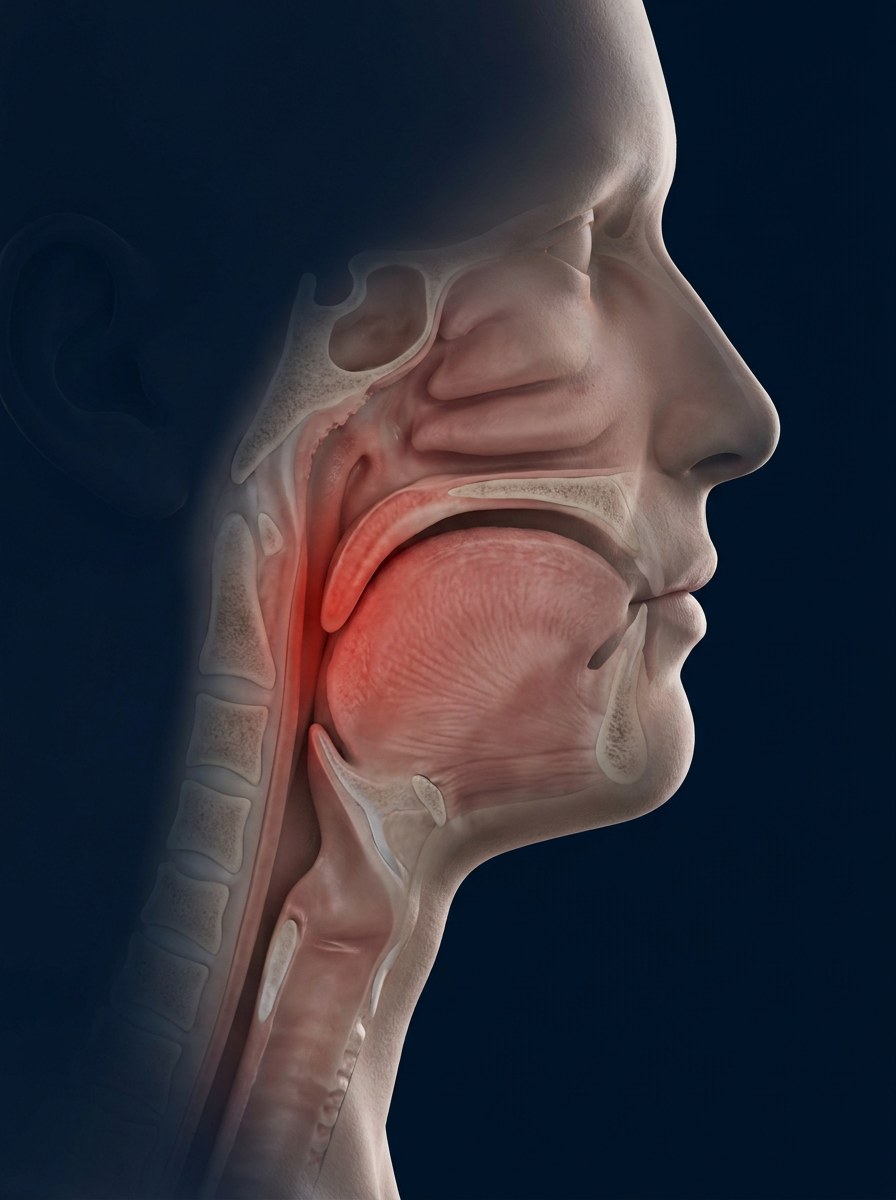
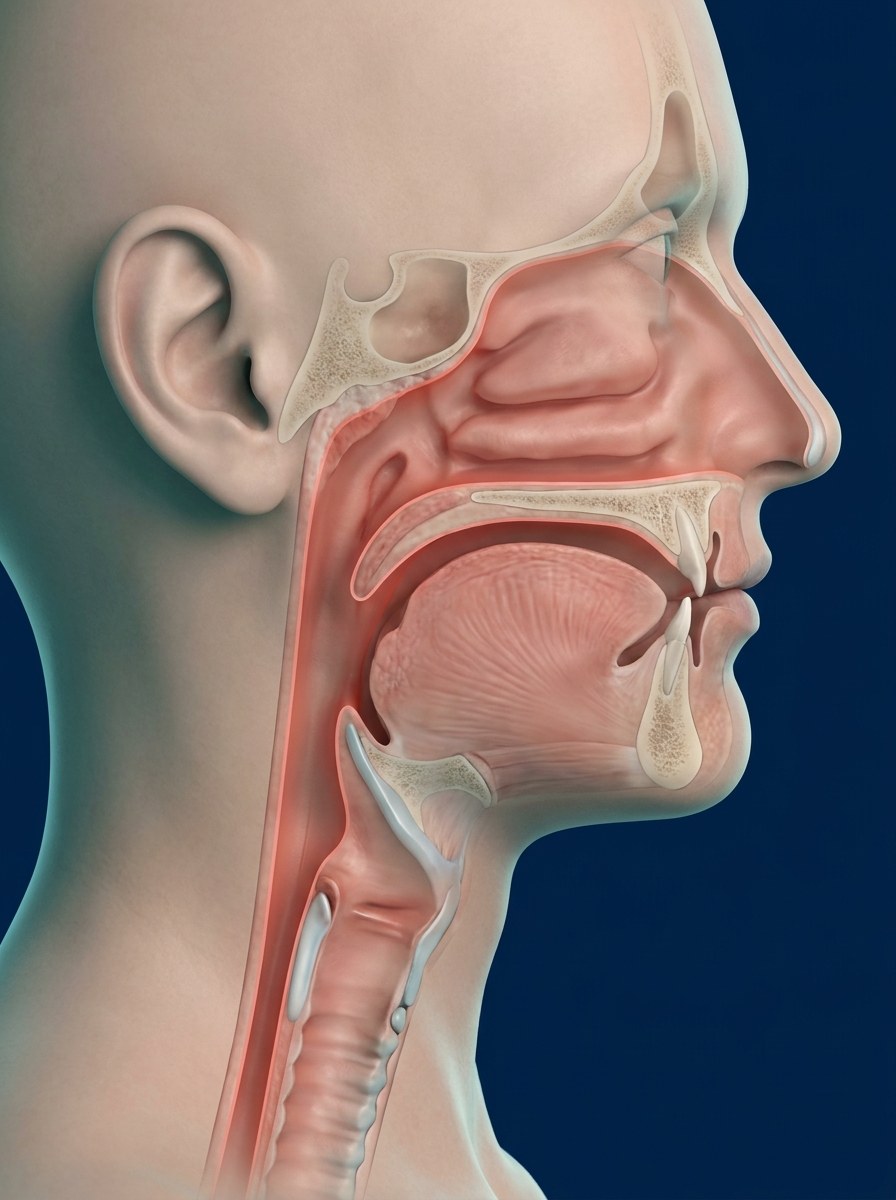
- Snoring. A low, coarse, snoring sound. In the unconscious patient the most common cause is the simplest one: muscle tone is gone, and the tongue and soft palate fall back against the back of the throat. The sound is generated above the voice box, in the nose and throat. It is the most common airway sound in an unconscious patient, and it is also the most correctable.
- Gurgling. A wet, bubbling sound means liquid in the upper airway: secretions, blood, vomit, or water sitting above the vocal cords. In a patient pulled from the water this is common, and it is not a sign that ventilation is adequate. It is a sign that there is fluid where air needs to pass.
- Stridor. A high-pitched sound from a narrowed airway, and the most concerning of the three because it points to obstruction at or near the voice box. Stridor on inspiration localizes higher, at the larynx. Stridor on expiration localizes lower, in the trachea and bronchi. Stridor on both phases points to the glottic or subglottic level. The localization detail matters less in the field than the recognition that high-pitched noisy breathing is a narrowing airway that may be getting worse.
The Boundary That Decides Everything
Here is the distinction article one deliberately left out, because it is the distinction a lay rescuer cannot be trusted to make under pressure.
Air movement is the discriminator. A patient producing noisy breathing is moving air through a partly blocked passage. A patient in arrest is not moving air at all, and the agonal gasp produces sound without exchange. The noisy, air-moving patient and the silent, non-moving patient are not managed the same way, and the difference between them is the difference between opening an airway and beginning compressions.
For the patient who is moving air past an obstruction, the field response is to open and clear the airway, not to begin compressions. The jaw thrust that article one teaches for cervical-spine protection is the same maneuver that relieves a tongue-and-soft-palate obstruction: forward displacement of the mandible pulls the tongue off the back of the throat and restores the passage. For gurgling, the field response is suction if equipped and lateral positioning to let fluid drain, again where cervical-spine status allows.
The failure mode runs in the other direction too, and it is the one that kills. A trained rescuer who has learned to look for obstruction can talk themselves into reading a true arrest as a blocked airway, and spend the salvage window adjusting a jaw thrust on a patient who needed compressions. The protection against that error is the same air-movement test, applied honestly. No air movement, no normal breathing, unresponsive: the article one binary governs, and the response is compressions. The obstruction reads are for the patient who is moving air. They are not a reason to delay compressions on the patient who is not.
When the Breathing Is Spontaneous but Wrong
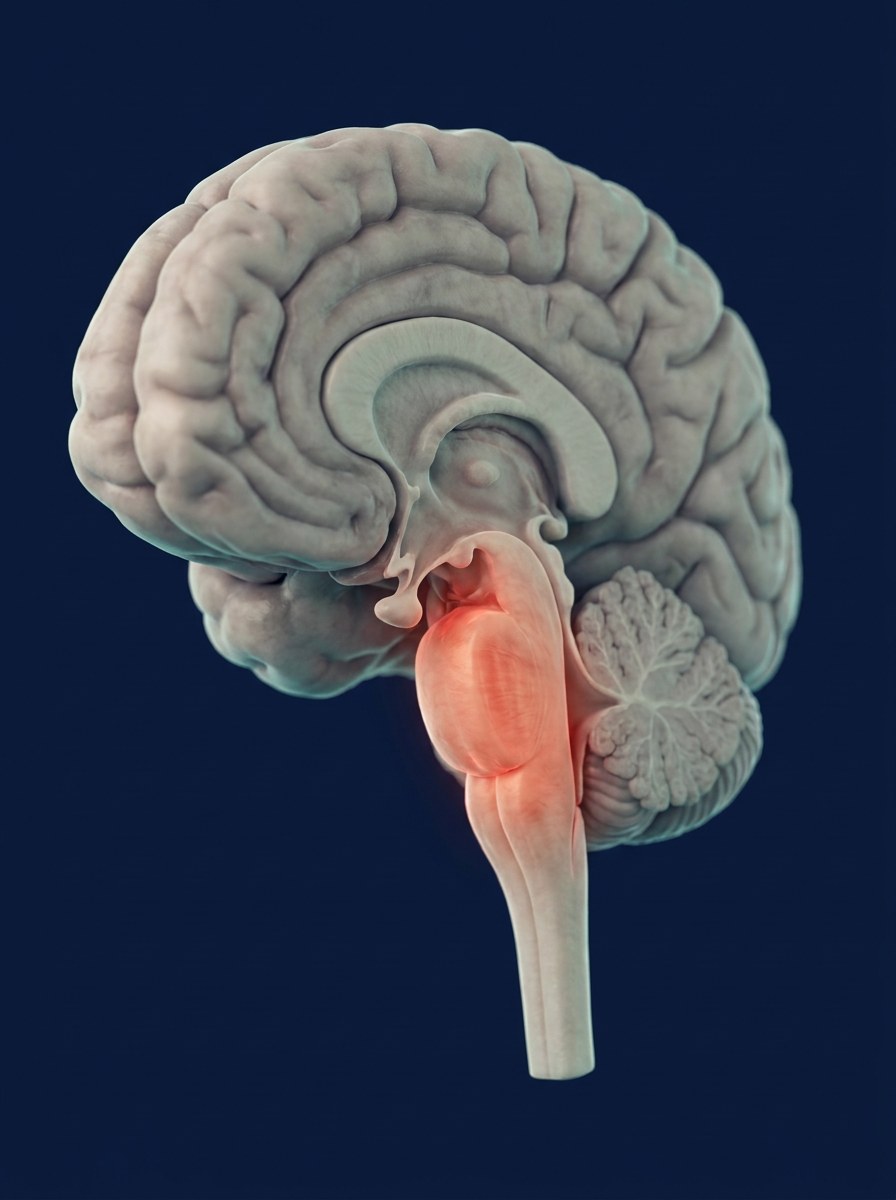
There is a third patient. Breathing on their own. Air moving. No obstruction sound. But the pattern is abnormal, and the reason it is abnormal is that the brain driving the breath has been injured.
These patterns are worth a trained rescuer's recognition not because naming them changes the field response, but because seeing one tells you the brain injury is serious and the patient needs urgent evacuation. They are distinct from the agonal gasp of article one, which is arrest, and from the noisy breathing above, which is obstruction. This is spontaneous breathing in a living, perfusing patient whose respiratory control is disordered.
- Cheyne-Stokes breathing. A cyclical pattern that builds and fades: breaths grow deeper, then shallower, then stop entirely for a stretch, then begin the cycle again. It is associated with serious illness and a poor prognosis.
- Central neurogenic hyperventilation. Sustained, rapid, deep breathing that continues whether the patient is awake or unconscious. It is uncommon, and it signals serious central injury.
- Apneustic breathing. Long, held inspirations with short, inadequate expirations. A gasping, prolonged-inhale pattern that signifies severe injury and carries a poor prognosis.
- Cluster breathing. Groups of breaths separated by irregular pauses of apnea. The breaths within a cluster are relatively uniform; the spacing between clusters is not.
- Ataxic breathing. Completely irregular and unpredictable, with no discernible pattern to either depth or timing. It is an ominous finding and frequently precedes respiratory arrest.
The actionable point for the trained surf rescuer is not which pattern maps to which part of the brain. That mapping is taught widely, but the primary literature does not support pattern-to-location specificity. In autopsy-correlated study, these patterns tracked the size and bilaterality of the brain lesion rather than its level. What the patterns share is what matters in the field: any of them, in a spontaneously breathing patient after a head impact, marks a serious brain injury and an urgent evacuation. The recognition does not change the breath-by-breath response. It changes how fast the patient needs to be moving toward definitive care.
The Watch After the Water
The last category is the patient who looks fine.
A surfer takes water, coughs it up, climbs back on the board or the boat, and seems recovered. Submersion physiology, covered in article one, leaves open the question of what happens in the hours that follow. The current standard comes from the Wilderness Medical Society's 2024 drowning guidelines, and it is specific. A patient who normalizes and shows no deterioration in breathing after 4 to 6 hours of observation can be cleared, and in the wilderness or evacuation setting, a mildly symptomatic victim who becomes asymptomatic for that same 4 to 6 hours is a candidate for cancelling further evacuation.
Two things about that window are worth holding together. The first is that it is the current guideline. The second is that the evidence behind it is weak, graded low-certainty by the panel that wrote it. The number is the best available answer, and the best available answer rests on weak evidence. Both are true at once, and a trained rescuer is served by knowing both.
That pairing is also the answer to the narrative that circulates every summer. The viral version says a person can drown hours or days after leaving the water, dry and symptom-free, and die in their sleep. What the guideline supports is narrower and less dramatic. The risk of delayed breathing trouble lives with the patient who had symptoms, a cough, low oxygen, an abnormal lung exam, and it lives in the first several hours, which is what the observation window is built around. Deterioration in a patient who was truly asymptomatic and normalized across a 4-to-6-hour window is rare. The watch matters most for the patient who was never quite fine.
What the Three Reads Add Up To
Article one gave the one read that every rescuer needs. This article gave the three reads that separate the patients article one treats as one. The noisy breather has an airway to open. The abnormal spontaneous breather has a brain injury to evacuate. The recovered swimmer has a window to be watched, weighted toward the one who had symptoms. Underneath all of it, unchanged, is the binary: unresponsive and not breathing normally means compressions. The discriminations are for the patient who does not meet it.
Created by a licensed physician for educational purposes only. Not individualized medical advice. Every injury requires direct clinical assessment. No physician-patient relationship is established. Full disclaimer linked in bio.